
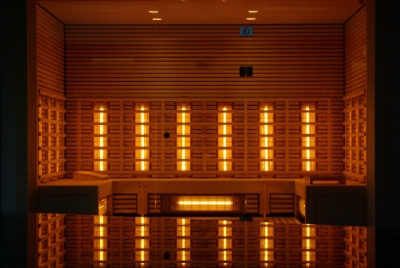
Infrared saunas are one of the most heavily marketed pieces of home wellness gear. They are also genuinely pleasant: a quiet, warm cabin that you can use at home without plumbing or a big electrical project. Here is what they do, what the research suggests, and what is marketing talk.
How an infrared sauna works
A traditional sauna heats the air, usually to somewhere around 160 to 195°F, and the hot air warms your body. An infrared sauna uses heaters that give off infrared light, which warms your body more directly. The cabin air stays cooler, often around 120 to 150°F, so many people find it easier to stay in for a full session.
You will see three types mentioned: near, mid and far infrared. Most home saunas use far infrared heaters, made from carbon or ceramic. Claims that each wavelength treats different problems are mostly marketing, so do not choose a sauna on that basis. Build quality, heater coverage, size and warranty matter more.
Possible benefits
- Relaxation. Sitting in gentle heat is relaxing, and many people sleep better after an evening session. This is the most reliable benefit.
- Muscle and joint comfort. Heat relaxes tight muscles, and some small studies found short-term pain relief in people with arthritis or chronic back pain.
- Heart and circulation. Small studies suggest regular infrared sauna sessions may modestly lower blood pressure or improve blood vessel function in some people. Large observational studies in Finland link frequent traditional sauna use with better heart health, but those studies cannot prove cause and effect and were not about infrared units.
- Light exercise effect. Your heart rate rises in a sauna, similar to a gentle walk. That is not a replacement for exercise.
Claims to treat with caution
- Detox. Sweat is mostly water and salt. Your liver and kidneys remove waste, not your sweat glands.
- Big calorie burn. Some sellers claim you can burn 600 calories in a session. The real number is far lower, and any weight lost during a session is mostly water you regain when you rehydrate.
- Curing illness or healing wounds. There is no good evidence that a sauna cures colds, speeds wound healing or reverses aging. Do not use a sauna on an open wound.
- Colored light therapies. Features such as chromotherapy lights and ionizers may look nice, but the health claims are not well supported.
Infrared or traditional: which should you choose?
- Choose infrared if you prefer gentler heat, want a unit that plugs in at home without special plumbing, or have limited space.
- Choose traditional if you like the steam and high heat of a classic sauna and have the space and wiring for a heater and rocks.
Both can be relaxing. The better sauna is the one you will actually use.
Running costs and placement
Most home infrared saunas use between about 1,500 and 2,000 watts, so a 30-minute session costs roughly 10 to 20 cents at typical US electricity rates. Cabins need a level floor, a little space around them for airflow, and a spot away from direct moisture. A basement room, spare bedroom or garage works well. Avoid placing a sauna in the bathroom itself unless the model is rated for it.
Safety basics
- Talk to a doctor first if you have heart or blood pressure problems, are pregnant, take medication that affects sweating or blood pressure, or have a medical implant.
- Drink water before and after. Keep sessions to about 15 to 30 minutes, and get out if you feel dizzy or unwell.
- Skip alcohol before a session, and do not use a sauna when you have a fever.
- Do not let children use a sauna unsupervised.
What to look for when you buy
Size is the first decision: one-person cabins fit in a small spare room, while three-person models need real floor space. Check how the unit is powered, since many smaller models plug into a standard household outlet while larger ones need a dedicated circuit. Look for low-EMF heaters, solid wood construction, a clear warranty, and honest owner feedback about heat-up time and heater coverage. We compare popular models in our best infrared sauna reviews.
Our take
An infrared sauna is a comfortable way to relax and warm up, and it may help with sore muscles and stiff joints. It is not a medical treatment. Buy one because you will enjoy using it, and you are unlikely to be disappointed.



Does near-infrared sauna help fight fibromyalgia symptoms?
Quite a few studies are suggesting this yes…