
On average it takes 30 to 40 seconds for hot water to travel from the water heater to your faucet or shower. A hot water recirculating pump solves that problem.
Waiting for hot water is frustrating, and it also wastes water and power. Like most people, you have probably let the cold water run down the drain while you waited. A recirculating pump cuts that delay by keeping hot water available throughout the plumbing of the house, and it stops cold and lukewarm water from being wasted while you wait for the hot water to arrive. In short, you get hot water quickly and save water and energy at the same time.
Below we compare three popular recirculating pump systems, and then explain how these pumps work, the types available and what to know about installing one.
| Product | Our Rating | ||
|---|---|---|---|
 |
Best for easy DIY installs
Watts Hot Water Recirculation System with Programmable Timer |
VIEW ON AMAZON | |
 |
Best overall
Grundfos 595916 Comfort System Recirculating Hot Water Pump |
VIEW ON AMAZON | |
 |
Best for under-sink installs
Laing LHB08100092 AutoCirc Recirculation Pump with Timer |
VIEW ON AMAZON |
Best Hot Water Recirculating Pump Reviews in 2026
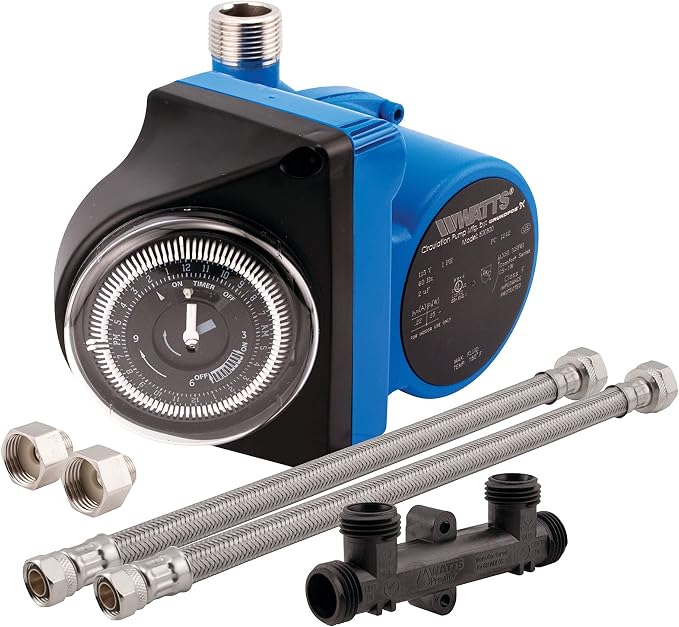
1. Watts Hot Water Recirculation System with Programmable Timer
The Watts system is built for ordinary tank water heaters and installs under the sink farthest from the heater, with no separate return line to run. A thermal bypass sensor valve opens when the water in the pipe is cold and sends it back to the heater, so hot water reaches the tap in seconds instead of going down the drain. A programmable 24-hour timer lets you run it only when you need it.
- Thermal bypass sensor valve, no return line needed
- 120V pump with a built-in 24-hour programmable timer
- Kit includes 2 adapters, sensor valve, mounting screws and 2 supply lines
- Designed for tank water heaters
- Brings hot water to the tap in seconds, so you stop wasting water while you wait
- Installs into existing plumbing with no return line or extra piping
- Programmable timer lets you run it only during peak use times
- Complete kit with the sensor valve, adapters and supply lines included
- A very large owner base shows it is a proven, popular design
- Meant for tank water heaters, so it is not a fit for tankless systems
- Supply can be limited, with few units offered at a time, so check availability before you plan the job
Our Verdict: The easiest recirculation system to add to an existing home with a tank water heater, though stock is limited so grab one while it is available.
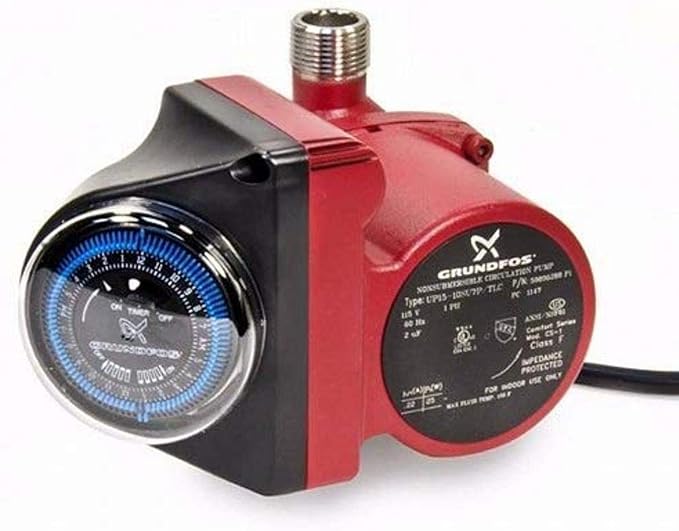
2. Grundfos 595916 Comfort System Recirculating Hot Water Pump
Grundfos supplies the best-known name in circulator pumps, and the 595916 Comfort System is a complete kit: a quiet 25-watt stainless steel pump, a timer, a line cord and the Comfort valve. It handles a flow range of up to 9 GPM and uses 3/4-inch connections, and it is built to run quietly for years with little maintenance.
- 25-watt, 115V single-phase pump with timer and line cord
- Flow range up to 9 GPM with 3/4" connections
- Comfort valve with temperature sensing
- Low-maintenance, quiet-running stainless steel pump
- Quiet, low-power motor that is built to run for years
- Complete kit with timer, line cord and Comfort valve in the box
- Temperature-sensing Comfort valve limits unnecessary running
- Stainless steel pump body resists corrosion
- The priciest of the three recirculation pumps here
- Comes with only a single Comfort valve, so extra fixtures need more hardware
- Offered by third-party sellers at the moment, so compare listings
Our Verdict: A rock-solid, quiet pump from a trusted brand and our top pick, though it is the most expensive of the three.
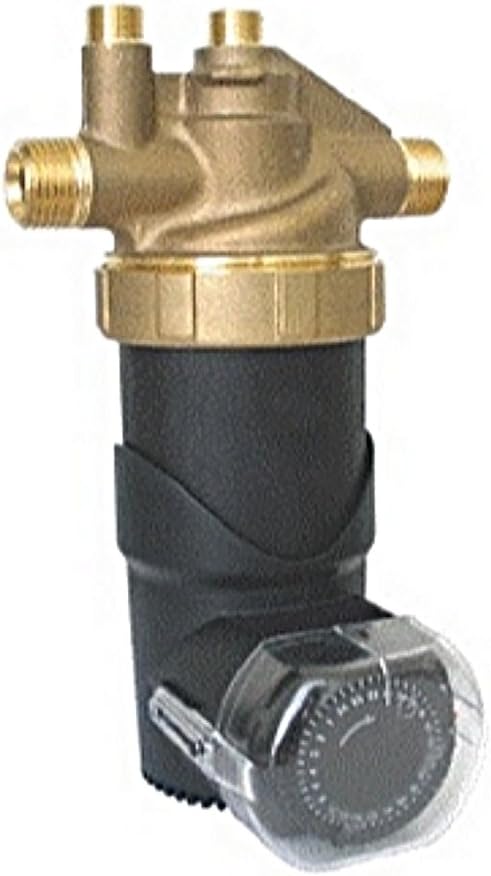
3. Laing LHB08100092 AutoCirc Recirculation Pump with Timer
Laing’s AutoCirc is designed to go under the sink or faucet farthest from the water heater, with no return line required. It draws only about 14 watts, runs whisper quiet at under 30 dB, and includes a 6-foot power cord and a built-in 24-hour timer so you can match the run time to your family’s habits.
- Installs under the farthest sink or faucet, no return line needed
- Only about 14 watts, whisper quiet at under 30 dB
- 6-foot power cord and built-in 24-hour timer
- Manufacturer claims savings of up to 17,000 gallons a year for a family of four
- Extremely quiet and very low energy use
- Simple under-the-sink install without a return line
- Built-in 24-hour timer fits a daily routine
- Gives hot water to other fixtures on the same line as well
- Lowest rating of the three, and some buyers report problems
- Offered by third-party sellers at a high price
Our Verdict: Great concept and very quiet, but with limited availability and uneven pricing it is hard to recommend over the Watts or Grundfos right now.
How Does a Hot Water Recirculating Pump Work?
It is basic plumbing. When you open a shower or faucet, the hot water has to travel from the water heater, and the cold or lukewarm water sitting in the pipe ahead of it has to move out first. That cold water is the cause of the delay, and normally it just flows down the drain.
A recirculating pump connects the hot and cold lines so that this cold water has somewhere else to go. The pump pushes the cold water from the pipe back toward the water heater, usually through a bypass valve that opens while the water is cold and closes automatically once hot water reaches the faucet, at which point the pump stops. The result is nearly instant hot water without wasting the cold water, and because less water has to be heated again, it also saves energy. The systems are designed so that hot water never crosses into the cold line, so every cold tap stays cold and every hot tap stays hot.
A pump can be started by a timer, a flow sensor or a switch.
Types of Recirculating Pumps
Choosing a pump is easier once you decide where it will be installed and how it will be controlled.
- Pump at the water heater. The pump sits next to the water heater and works with a dedicated return line, so hot water circulates in a loop from the heater through the supply line and back. The main hot water line stays primed with hot water. This setup is mostly used in new buildings, and branch lines to individual fixtures are not kept hot, so some delay can remain at those fixtures.
- Pump at a point of use. The pump sits near a fixture and needs no dedicated return line, because it uses the cold water line to send the cold water back to the heater until hot water is sensed. It works in almost any building, including where no return line exists, and the fixture with the pump gets near-instant hot water. Other fixtures still need to clear the cold water between the main hot line and the tap.
- Timer/aquastat-driven systems. A timer and a thermostat (aquastat) work together to keep hot water in the pipes during set periods, such as the busy morning and evening hours. The pump does not run all day; it runs only when the aquastat senses the water has cooled below a set temperature and the timer allows it. Because the pipes stay pre-heated, you also lose less heat on the way to the tap.
- On-demand systems. You activate the pump yourself, with a button, a remote switch or even a motion sensor. When it starts, it pulls hot water from the heater and sends the cold water trapped in the hot line to the cold line, then shuts off when it senses hot water. Because the pump only runs when needed and the pipes are not kept hot all day, on-demand systems are very efficient and reduce heat loss.
Hot Water Recirculating Pump Installation
Installing a recirculating pump is not a lengthy or expensive job. Because no special location is required, it can be installed at the water heater or at a point of use, on timer or on-demand systems. For many homeowners it is a simple task that can be done in about an hour.
If you do not know your plumbing well, call a professional instead. Some states and cities have strict rules about modifying water supply lines connected to the public supply, so it is wise to check with a local plumber before cutting into any pipes, or to hire a licensed plumber to install the pump for you. Professional installation costs a little, but it avoids problems later.
The Benefits of a Recirculating Pump
- Water saver: cold and lukewarm water no longer runs down the drain while you wait for hot water.
- Power saver: less water has to be heated again for everyday use.
- Life extender: reducing the workload of the water heater can help extend its life.
- Versatile: it can be installed almost anywhere and works with most plumbing systems.
Related guides
Pick the pump that matches your water heater, your plumbing and your budget. If you are also upgrading the water heater, see our tankless water heater reviews and our shower systems buying guide.